Team Building and Bonding in a South of France Retreat
Key Takeaways
Planning professional gatherings in Southern France requires careful attention to venue selection, agenda design, and employee wellbeing. These strategic elements harmonize to transform a standard business trip into an impactful team-bonding experience.
- Selecting an exclusive venue that balances professional needs with local charm.
- Creating a balanced schedule that prioritizes both high-level output and restorative downtime.
- Leveraging the regional landscape to foster genuine team connections and collaborative growth.
- Managing logistics with precision, from catering to seamless transportation and onsite support.
- Cultivating psychological safety and inclusivity to ensure every voice contributes to organizational success.
Choosing the perfect venue for team retreats South of France
Selecting the right environment sets the foundation for a productive offsite, allowing colleagues to disconnect from their usual office pressures. When your primary goal is fostering creativity, you need a space that encourages both collaboration and individual focus. Properties such as Maison Mia Majorelle offer the unique spatial flexibility essential for high-performing teams to thrive in an authentic setting.
Assessing venue capacity and spatial requirements for collaboration
First, evaluate whether the venue offers sufficient square footage for diverse group sizes and breakout tasks. A configuration that includes both large common areas and secluded alcoves allows teams to oscillate between intense workshops and private, reflective work.
Balancing professional meeting facilities with leisure amenities
Modern offsites require an optimal blend of professional infrastructure and high-end comfort. Ensure your venue provides reliable connectivity and ergonomic meeting spaces without sacrificing the inviting atmosphere that makes a stay truly restorative.
Considering location and accessibility across the French Riviera and Provence
Location dictates the rhythm of your retreat; proximity to major transport hubs reduces transition fatigue for attendees. Choosing a base like a holiday cottage in a quiet, central region facilitates better immersion into the local culture while remaining logistically sound.
Securing total exclusivity for private group dynamics and focus
Total exclusivity ensures that group discussions remain confidential and uninterrupted. By reserving a private estate, you empower your team to operate without external distractions, fostering a sense of ownership over their collective output and strategy sessions.
Designing a balanced agenda for productivity and relaxation
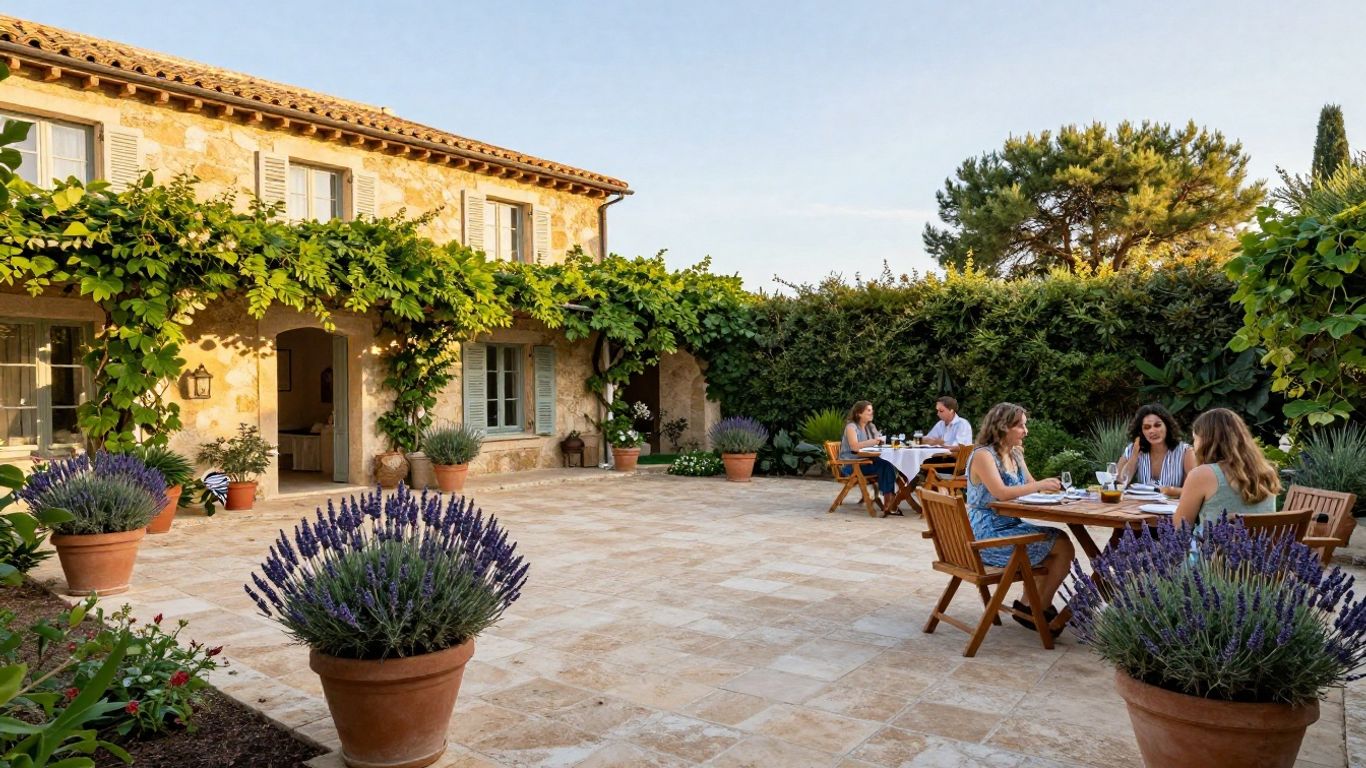
An effective schedule requires intentional pacing to maintain energy levels throughout the week. By alternating between structured sessions and unstructured exploration, you minimize the risk of burnout while maximizing mental clarity for key decision-making.
Allocating dedicated time for high-level strategic planning sessions
Schedule these sessions during the most productive hours, typically in the morning. Providing a mental break after lunch allows for a smooth transition back into group exercises or individual deep work when energy typically wanes.
Incorporating wellness and downtime activities to prevent burnout
Integrate wellness activities that cater to various physical levels, such as guided nature walks or evening yoga sessions. These moments of stillness are essential for maintaining a high-functioning team across several days of immersive collaboration.
Creating flexible scheduling to adapt to real-time team energy
Consider adopting the following approach to manage daily flow effectively:
- Maintain a dynamic agenda that can shift based on session velocity.
- Designate optional afternoon blocks for specialized team sub-groups.
- Keep evenings clear of agenda items to encourage organic social development.
- Pivot activities based on immediate team feedback and engagement levels.
These adjustments demonstrate leadership that values the team’s current state over a rigid, pre-defined master plan.
Aligning daily activities with core corporate objectives and KPIs
Every activity must link back to your core objectives, whether it be enhancing cross-departmental communication or refining a new product roadmap. Aligning these goals with local experiences, such as a winery visit that mirrors your business growth strategy, anchors concepts firmly through shared memory.
Facilitating effective team bonding and interaction
Building lasting relationships within a team rarely happens in a boardroom. By placing the group in a vibrant new setting, you encourage them to connect naturally through shared, non-work related challenges and cultural discoveries.
Leveraging the natural landscape for outdoor collaborative challenges
Organize tasks that demand communication in open-air settings, away from screens and devices. Navigating local terrain or engaging in problem-solving activities amidst the stunning French countryside promotes a different kind of rapport than digital collaboration.
Organizing local cultural experiences to foster shared memories
Engage with the local heritage through guided tours, tastings, or artisan demonstrations. These experiences provide a canvas for the team to interact in an informal, relaxed environment, helping dissolve traditional hierarchical boundaries.
Hosting team-building workshops in unique, inspiring settings
Unique settings can break old habits of thinking. Whether it’s an outdoor amphitheater or a historic garden terrace, finding a non-traditional space for workshops encourages participation from quieter members of your team.
Encouraging informal networking through curated communal dining experiences
Prepare a romantic getaway style dinner setting that prioritizes long-format conversation. Communal dining allows team members to interact across departments in a way that is simply not possible during a rushed office lunch or back-to-back meeting day.
Managing logistical excellence for a seamless experience
Logistical failures can derail even the most carefully planned strategic goals. By centralizing management of every move, you provide the participants with the psychological freedom to focus entirely on the material at hand.
Coordinating high-quality catering and authentic regional culinary offerings
Regional flavors are a pillar of the French experience; partner with local chefs who use seasonal ingredients. Providing exceptional meals not only fuels high engagement but signals that you respect the team’s needs and preferences.
Managing complex transportation requirements between airport, venue, and activities
Transportation errors are the most common source of frustration during group travel. Ensure all departures and arrivals are handled by professional local services that know the geography intimately, preventing delays and confusion in winding rural roads.
Handling technical and audiovisual requirements for professional presentations
Never assume that a historic setting includes modern connectivity. Verify that every space is prepared with the necessary power, projection, and sound systems ahead of time, and test these systems thoroughly on the morning of each presentation.
Engaging professional onsite support to manage event execution
Excellence in execution depends upon anticipating needs before the team identifies them. A dedicated host presence ensures that every minor adjustment is handled discreetly, allowing the retreat lead to remain focused on the group experience.
Having skilled personnel onsite relieves the pressure on team members to manage logistics themselves, creating a truly stress-free atmosphere throughout the event.
Maximizing the organizational return on investment
To ensure your investment delivers tangible results, you must bridge the gap between the retreat activities and the reality of the office. Documentation and follow-up are the primary mechanisms that convert this experiential learning into long-term behavioral change.
Establishing clear, measurable objectives for the retreat experience
Before boarding, articulate specific outcomes your organization needs. Whether it is an increase in trust or a resolution to a specific bottleneck, setting clear benchmarks allows you to audit the success of the offsite immediately upon your return.
Measuring qualitative improvements in team communication and trust
Use short, anonymous feedback loops during the retreat to capture the pulse of the team. Understanding how morale shifts day-by-day provides data on what works and what needs adjustment before the next iteration.
Documenting actionable insights for post-retreat implementation
As the team surfaces ideas, assign an owner and a timeline for every actionable piece of feedback. This process confirms that the energy generated during the retreat is not lost to the vacuum of returning to a busy inbox.
Cultivating long-term improvements in morale and employee retention
When teams feel heard and invested in by their leadership, retention naturally follows. A successful, well-planned retreat serves as proof of commitment to your most important asset: the employees themselves.
Cultivating a climate of inclusivity and psychological safety
Safety is the bedrock upon which high-performance communication is built. Without it, silence or groupthink can easily overtake the group’s discourse, leading to missed opportunities and hidden resentments.
Addressing diverse participant preferences, accessibility, and dietary needs
Inclusivity starts with the granular details of the planning phase. When you reserve your dates, clearly confirm that the venue can accommodate every dietary requirement and accessibility need before finalizing any bookings or contracts.
Selecting activities that promote engagement without undue pressure
Give team members a spectrum of choices, rather than forcing participation in high-stakes activities. Providing a low-pressure path invites people to contribute at their own comfort level without feeling singled out.
Fostering an environment of openness, active empathy, and mutual respect
Lead by example during group discussions. Demonstrating active listening and valuing diverse perspectives at the top level encourages others to follow suit, building a culture that persists long after the trip concludes.
Facilitating structured debriefing sessions to ensure all voices are heard
End your trip with a space designed to surface thoughts that may have been overlooked. Structured debriefs ensure that the quietest members of the group are given the same platform as the boldest, leading to more comprehensive insights.
Conclusion
A deliberate, well-executed team retreat in the South of France provides the perfect distillation of strategy, bonding, and restoration. By aligning your corporate vision with a thoughtful, inclusive environment, you create an enduring impact that pays dividends in team health and professional excellence.